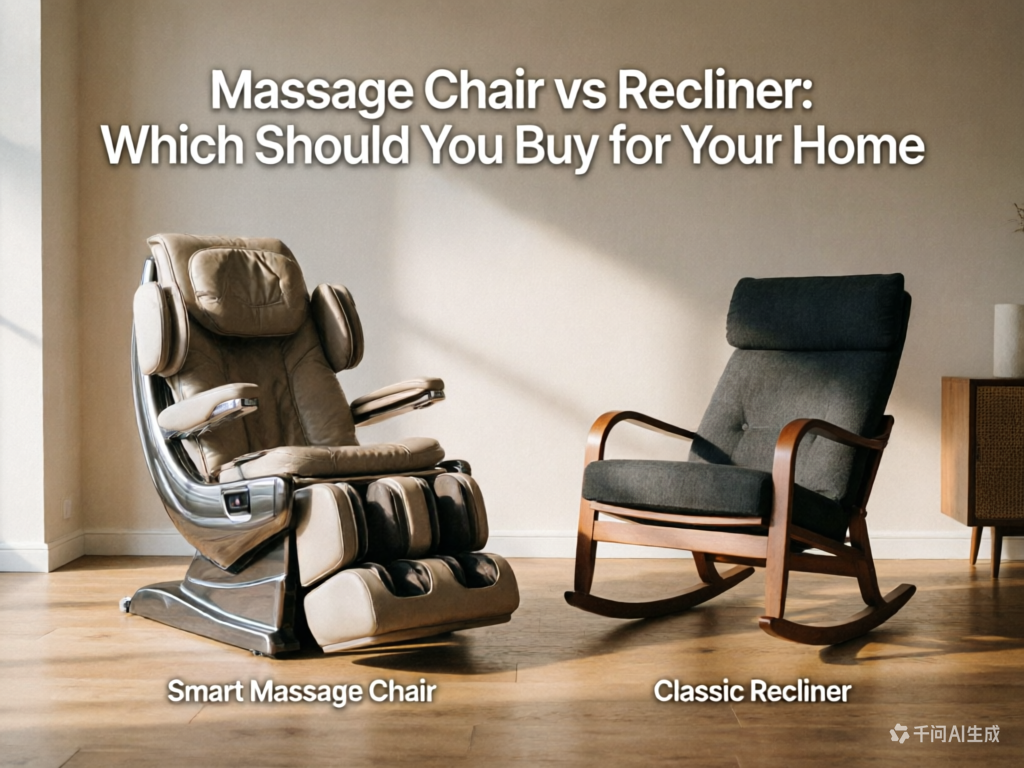
You come home after a long day. Your back aches. Your shoulders are tight. You just want to sit down and relax. But then comes the question: Should you sink into a comfortable recliner or invest in a massage chair?
At first glance, they seem similar. Both recline. Both offer comfort. Both help you unwind. But the truth is, these two types of seating serve completely different purposes — and choosing the wrong one can leave you disappointed.
In this guide, we’ll break down everything you need to know about massage chairs vs recliners: how they work, what they cost, which one fits your lifestyle, and how to make the right choice for your home and your body.
🎯 Quick Verdict: Choose a massage chair if you want active therapeutic relief for muscle tension, back pain, and daily recovery — use it for 15-30 minute sessions. Choose a recliner if you want passive comfort for long hours of TV watching, reading, or napping — and you don’t need therapeutic massage.
What Exactly Is Each Chair?
Before comparing, let’s understand what each chair actually is.
🪑 Recliner: Comfort for Long Hours
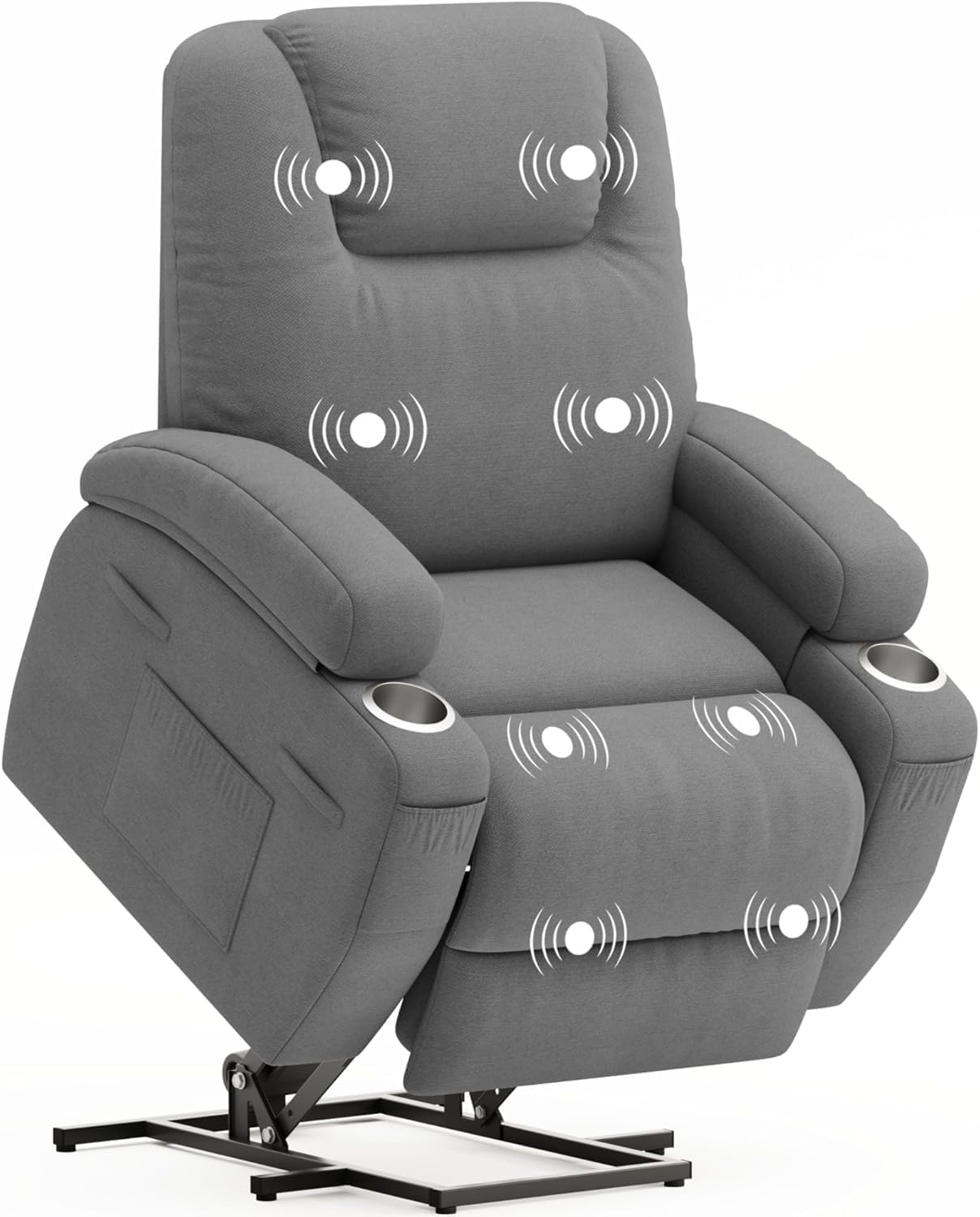
A recliner is a chair designed for passive comfort. It leans back, lifts your feet, and helps you find a comfortable position for reading, watching TV, or napping. Some high-end recliners add basic vibration or mild heat pads, but these are convenience features — not therapeutic tools.
Primary purpose: Relaxation and comfortable seating for extended periods.
Typical session length: 2-4+ hours.
Key features: Adjustable backrest, extendable footrest, cushioned seating, cup holders (on some models).
💆 Massage Chair: Active Therapeutic Relief
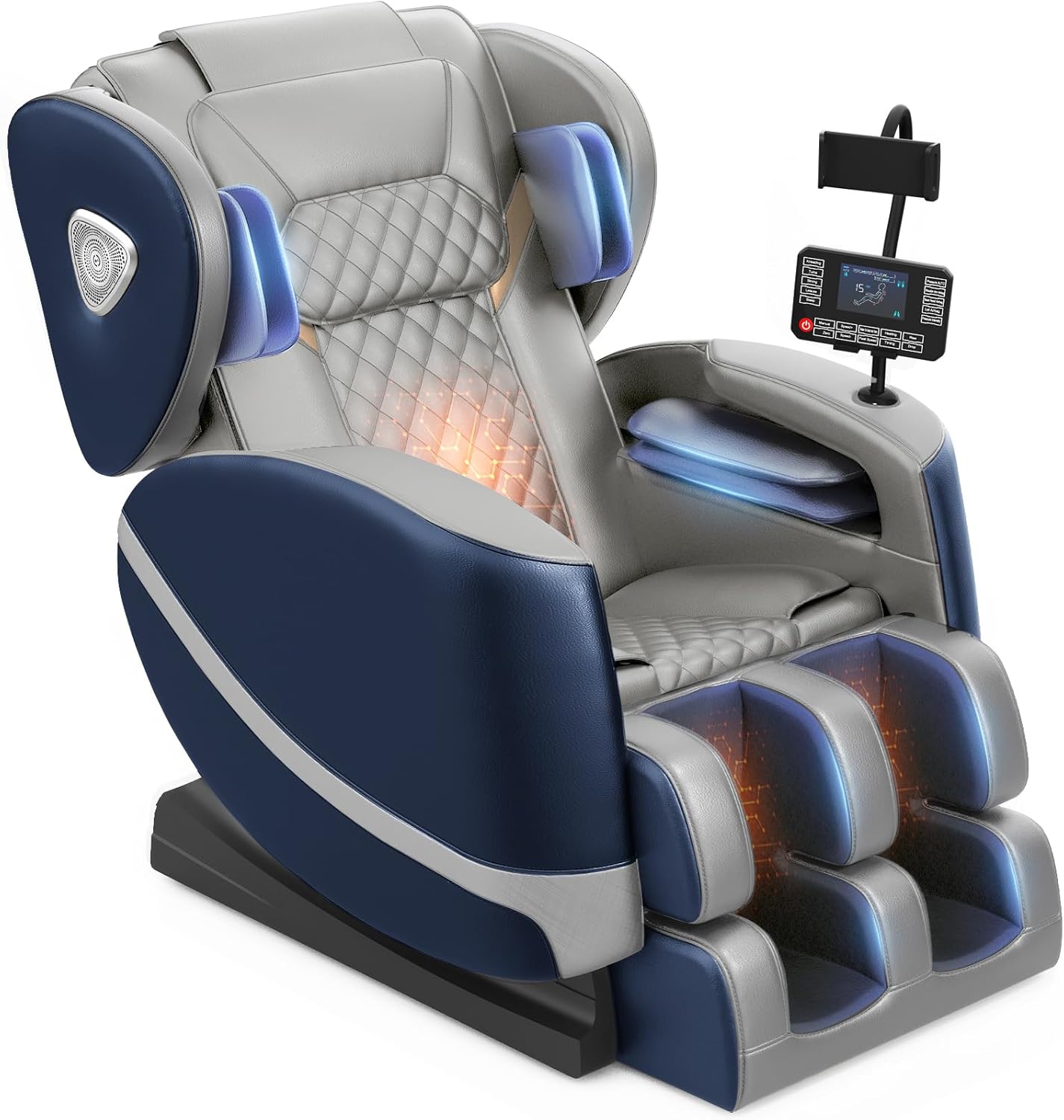
A massage chair is a powered recliner built around a roller track that applies mechanical pressure along your back, glutes, and legs. It uses rollers, airbags, heat, and zero-gravity positioning to actively work on your muscles. Programs are typically timed for 15-30 minutes because the chair is doing active work on your tissue and joints. [citation:1]
Primary purpose: Therapeutic relief, muscle recovery, and stress reduction.
Typical session length: 15-30 minutes.
Key features: 3D/4D rollers, SL-track coverage, airbag compression, heat therapy, zero gravity recline, body scanning.
The 7 Key Differences: Massage Chair vs Recliner
1. Comfort Type: Active vs Passive
This is the most important difference. Recliners provide passive comfort — they support your body in a relaxed position, letting you rest without any active intervention. The comfort comes from cushions, ergonomic angles, and the ability to adjust your posture.
Massage chairs provide active comfort — they don’t just hold you; they work on you. Rollers knead your muscles, airbags compress your limbs, and heat penetrates tight tissue. It’s a fundamentally different experience. [citation:2]
Winner: Tie — depends on what you need at the moment.
2. Session Length: Short Recovery vs Long Lounging
This is the fastest way to decide which chair is right for you.
| Session Length | Best Choice | Why |
|---|---|---|
| 15-30 minutes (recovery) | Massage Chair | Active work on muscles, timed programs, therapeutic focus |
| 2-4+ hours (lounging) | Recliner | Passive comfort, stable posture, no mechanical noise |
Winner: Depends on your usage pattern — choose by session length first.
3. Health Benefits: Basic Support vs Comprehensive Therapy
Recliners offer basic ergonomic benefits. A good recliner with lumbar support can help maintain healthy posture, reduce pressure on the lower back, and distribute weight evenly. But that’s where the health benefits end. [citation:3]
Massage chairs offer extensive health benefits: [citation:2][citation:8]
- Muscle tension and pain relief (deep tissue work)
- Improved blood circulation
- Lower stress hormones (cortisol reduction)
- Better sleep quality
- Spinal decompression through zero gravity positioning
- Improved posture by releasing tight muscles
Winner: Massage Chair — significantly more health benefits.
4. Price: Budget-Friendly vs Investment
The price difference is substantial.
| Chair Type | Price Range | Typical Entry Point |
|---|---|---|
| Recliner | $200 – $1,500 | $300-500 |
| Massage Chair | $500 – $12,000+ | $800-1,500 |
Recliners are significantly cheaper because they have fewer moving parts — just a manual or powered recline mechanism. Massage chairs are more expensive due to motors, roller tracks, air pumps, control boards, and heat elements. [citation:2]
Winner: Recliner — much more affordable upfront.
5. Space Requirements: Flexible vs Dedicated
Recliners are generally more space-friendly. Wall-hugger models can recline fully with as little as 6 inches (152 mm) of wall clearance. They fit easily into most living rooms, home theaters, and bedrooms. [citation:1]
Massage chairs need more space. Even space-saving models need 2-6 inches of wall clearance, and standard models need 12-15 inches. They also need room for the footrest to extend and space to walk around. Full-body massage chairs can weigh over 200 lbs and require a dedicated spot. [citation:1]
Winner: Recliner — more flexible placement, especially for small spaces.
6. Maintenance: Simple vs Complex
Recliners need basic upkeep: vacuuming upholstery, occasional tightening of moving parts, and lubricating joints every 6 months. With fewer moving parts, there’s less that can break. [citation:10]
Massage chairs need more attention: regular cleaning of rollers and airbags, checking power cords and connections, and periodic professional servicing for motors and electronic controls. More components mean more potential failure points. [citation:8]
Winner: Recliner — simpler maintenance and fewer things to break.
7. Noise Level: Silent vs Operational
Recliners are silent. Even powered recliners only make noise when moving into position — otherwise, they’re completely quiet. This makes them ideal for shared spaces, home theaters, and bedrooms where noise matters.
Massage chairs make operational noise — rollers moving, air pumps running, motors working. Quality chairs operate at 45-55 decibels (quiet conversation level), but the noise is always present during a session. Some users find this distracting during movies or quiet activities. [citation:1]
Winner: Recliner — silent operation is better for long viewing sessions.
Feature Comparison: Side by Side
| Feature | Massage Chair | Recliner |
|---|---|---|
| Primary purpose | Therapeutic relief | Comfortable seating |
| Comfort type | Active (rollers, airbags) | Passive (cushions, angles) |
| Session length | 15-30 minutes | 2-4+ hours |
| Health benefits | Extensive | Basic ergonomic |
| Price range | $500 – $12,000+ | $200 – $1,500 |
| Space needed | Dedicated footprint | Flexible |
| Wall clearance | 2-15 inches | 6-10 inches |
| Maintenance | Complex (motors, rollers) | Simple (basic cleaning) |
| Noise level | 45-55 dB during use | Silent |
| Aesthetic variety | Limited | Extensive |
Who Should Buy a Recliner?
✅ Choose a recliner if:
- You want a comfortable seat for long hours of TV watching, reading, or napping
- Your budget is under $1,000 and you can’t stretch to a massage chair
- You have limited space and need a chair that fits in a corner
- You want aesthetic variety — recliners come in many styles, colors, and materials to match your decor
- You don’t have specific therapeutic needs — you just want to relax
- You’re buying for a shared living space where multiple people will use the chair for different activities
- You prefer simplicity — no buttons, no programs, no learning curve
Who Should Buy a Massage Chair?
✅ Choose a massage chair if:
- You have chronic back pain, muscle tension, or stiffness that needs regular therapeutic attention
- You want daily recovery from workouts, long workdays, or physical labor
- You’re willing to invest $1,000+ for long-term health benefits
- You have a dedicated space for the chair — it’s not moving around
- You want targeted relief for specific areas like neck, shoulders, lower back, or legs
- You currently spend money on professional massages and want to save in the long run
- You value health benefits like improved circulation, stress reduction, and better sleep
Can a Recliner with Massage Features Replace a Massage Chair?
No — not for therapeutic needs. Some recliners add basic vibration or heat pads, but these are convenience features, not therapeutic tools. They can’t provide the deep kneading, roller movement, airbag compression, or zero gravity positioning of a true massage chair. [citation:6][citation:9]
Think of it this way: a recliner with massage features is like a car with a basic radio. A real massage chair is like a car with a premium sound system, navigation, heated seats, and driver assistance. Both get you where you’re going, but the experience is completely different.
What About Having Both?
Many households actually have both. A common setup: [citation:1][citation:9]
- Massage chair in a bedroom, home office, or dedicated wellness corner — used for 15-30 minute recovery sessions
- Recliner in the living room or home theater — used for long movie marathons, reading, and everyday lounging
This gives you the best of both worlds: therapeutic relief when you need it, and comfortable lounging when you don’t.
Frequently Asked Questions
Is a massage chair worth the extra money over a recliner?
Yes — if you have therapeutic needs. A massage chair provides active muscle relief, improved circulation, stress reduction, and spinal decompression — benefits a recliner simply cannot offer. If you just want a comfortable place to sit, save your money and buy a recliner. If you want daily therapeutic relief, the massage chair is worth every penny. [citation:2][citation:8]
Can I sleep in a massage chair?
Massage chairs are designed for 15-30 minute sessions, not all-night sleep. The rollers, motors, and airbags are active during massage, which would be disruptive during sleep. Some zero gravity positions are comfortable for napping, but a recliner is better for actual sleeping.
Which is better for back pain: massage chair or recliner?
Massage chair — by a wide margin. Recliners offer basic ergonomic support, but they don’t actively treat back pain. Massage chairs use rollers, heat, and stretching to work on tight muscles, improve circulation, and reduce tension. For chronic back pain, a massage chair is the better choice. [citation:3][citation:8]
Are massage chairs good for seniors?
Yes — with proper selection. Seniors benefit greatly from massage chairs’ ability to improve circulation, reduce arthritis pain, and ease muscle stiffness. However, choose a chair with adjustable low intensity and easy entry/exit. For seniors with mobility issues, a power lift recliner might be more practical than a massage chair.
Do massage chairs use a lot of electricity?
No. A typical massage chair uses about 200 watts during operation. Used 30 minutes daily, that’s roughly 3 kWh per month — about $1.10 at average electricity rates. Recliners use minimal power (only when moving), so both options are economical to run. [citation:1]
How long do massage chairs last vs recliners?
Recliners generally last longer because they have fewer moving parts. A quality recliner can last 10-15+ years with basic maintenance. A massage chair typically lasts 5-10 years, depending on usage frequency and build quality. The trade-off is that the massage chair provides active therapeutic benefits during its lifespan. [citation:8][citation:10]
Final Verdict: Which Should You Buy?
🎯 Buy a Recliner if: Your primary need is comfortable seating for long periods, your budget is under $1,000, space is limited, and you don’t have specific therapeutic needs. Recliners are perfect for movie watching, reading, napping, and everyday lounging.
🎯 Buy a Massage Chair if: You have chronic muscle tension, back pain, or stress that needs regular therapeutic attention. You’re willing to invest $1,000+ for daily recovery, and you have space for a dedicated chair. The health benefits — improved circulation, reduced pain, better sleep — make it worth the investment.
🎯 Consider Both if: Your budget and space allow. Many households keep a massage chair for recovery sessions and a recliner for everyday lounging. This gives you therapeutic relief when you need it and comfortable seating when you don’t.
Ultimately, the choice between a massage chair and a recliner comes down to how you’ll use it. Choose by session length first — short recovery sessions point to a massage chair; long lounging sessions point to a recliner. Then consider your budget, space, and health needs. Either way, investing in quality seating that supports your body is always a smart decision.
📌 Related guides: