


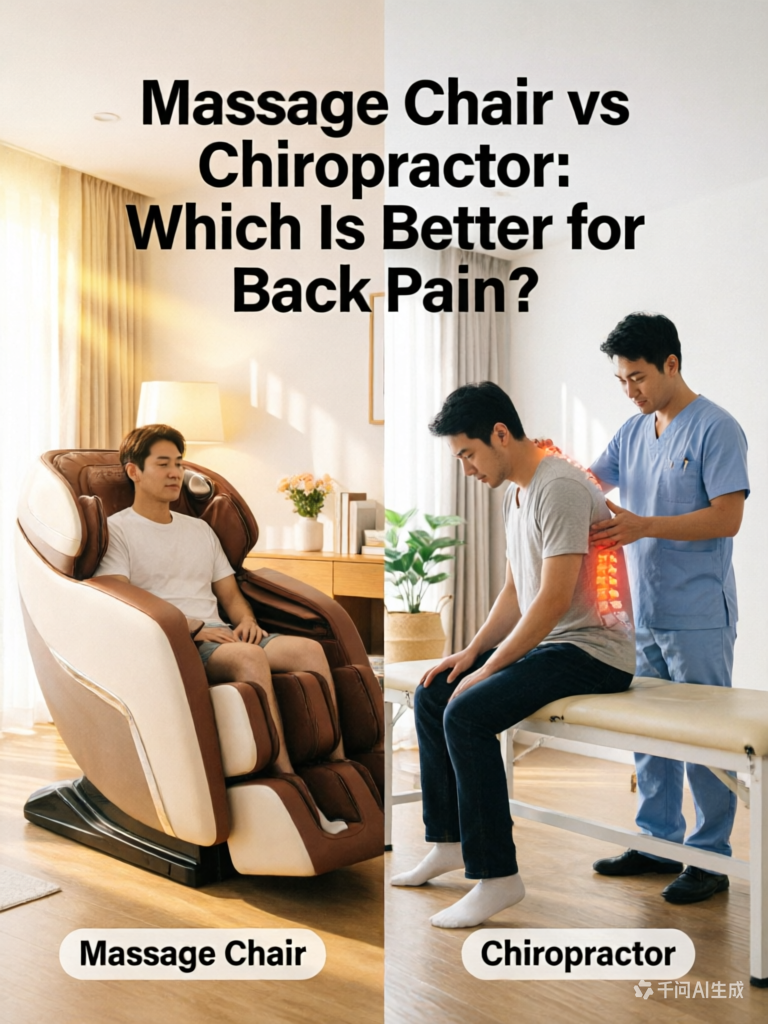
If you suffer from chronic back pain, you have likely considered both options: investing in a massage chair for daily home use, or committing to regular visits with a chiropractor. Both promise relief, but they work very differently — and for many people, the cost difference is substantial.
So which is better? The short answer: Chiropractors are clinically superior for acute pain relief and spinal alignment, but massage chairs are significantly more cost-effective for daily maintenance and offer comparable patient satisfaction. A rigorous randomized controlled trial found that massage chair therapy is a promising treatment for pain control and quality of life modification — but chiropractic care excels in specific diagnoses.
In this comprehensive guide, we will compare massage chairs and chiropractic care across seven key dimensions: effectiveness, cost, convenience, types of conditions treated, and long-term outcomes. We will also help you decide which approach — or combination — is right for your back pain.
🎯 Key Takeaway: Chiropractors are superior for acute pain relief, spinal misalignment diagnosis, and hands-on adjustments. Massage chairs are 60-80% cheaper for daily maintenance and provide comparable satisfaction for chronic muscle tension. The best approach for many people is to use both: chiropractic for acute treatment, massage chair for daily maintenance.
What Does a Chiropractor Do?
A chiropractor is a licensed healthcare professional trained to diagnose and treat neuromuscular disorders, with an emphasis on manual adjustment and manipulation of the spine. The core belief of chiropractic medicine is that proper alignment of the body’s musculoskeletal structure, particularly the spine, enables the body to heal itself without surgery or medication.
Common chiropractic techniques include:
- Spinal manipulation (adjustment): Applying controlled force to joints that have become restricted due to tissue injury
- Spinal mobilization: Gentler stretching and movement of joints without high-velocity thrusts
- Soft tissue therapy: Massage and stretching of tight muscles
- Therapeutic exercise: Prescribing specific exercises for strengthening and flexibility
- Lifestyle counseling: Ergonomic and postural advice to prevent recurrence
Chiropractors can diagnose conditions like herniated discs, spinal stenosis, and sciatica through physical examination and imaging (X-rays, MRI). They are trained to identify the root cause of pain, not just treat symptoms.
What Does a Massage Chair Do?
A massage chair is a home wellness device that uses mechanical rollers, airbags, heat, and zero gravity positioning to provide therapeutic massage. Unlike chiropractors, massage chairs cannot diagnose conditions or perform spinal adjustments. However, they provide mechanical massage that mimics human hands.
Massage chairs provide:
- Roller massage: 2D/3D/4D rollers knead and tap along your spine
- Airbag compression: Airbags squeeze arms, legs, and feet
- Heat therapy: Lumbar heat increases blood flow and loosens muscles
- Zero gravity positioning: Reduces spinal pressure by up to 80%
- Stretching programs: Gentle elongation of spine and legs
- Targeted programs: Specific modes for neck, lower back, shoulders, etc.
Massage chairs treat muscle tension and soreness but cannot correct spinal misalignments. They operate through the gate control theory of pain — massage creates sensory signals that block pain signals from reaching the brain.
Effectiveness: What the Evidence Says
For Acute Lower Back Pain
For acute episodes (sudden onset, severe pain), chiropractic care has a clear advantage. A chiropractor can perform specific diagnostic tests, identify the exact source of pain (e.g., herniated disc, pinched nerve, misaligned vertebra), and apply targeted adjustments — something a massage chair cannot do.
Studies show that chiropractic adjustments can provide significant pain relief for acute low back pain, with benefits often felt within 1-2 sessions.
For Chronic Muscle Tension
For chronic, recurring muscle tension, both treatments are effective. A randomized controlled trial comparing chiropractic care to massage found that patient satisfaction was not significantly different between the two when treating chronic neck pain. Both treatments reduced pain and disability, with massage having a slight edge in cost-effectiveness.
For general muscle tightness with no spinal misalignment, daily massage chair use can prevent tension from building up into chronic pain.
For Maintenance and Prevention
Massage chairs excel at maintenance therapy. Once acute pain is under control, a massage chair can provide daily relief to prevent recurrence. The ability to use it 24/7 at home without appointments makes it ideal for keeping muscles loose and preventing tension buildup.
Cost Comparison: The Numbers Tell a Clear Story
The cost difference between massage chair therapy and chiropractic care is substantial.
Typical chiropractic costs:
- Initial consultation and exam: $100-$200 (including X-rays if needed)
- Standard adjustment session: $50-$100 per visit
- Follow-up visits: $40-$70 per visit
For a patient needing 2-3 adjustments weekly for 4-6 weeks (common for acute issues), costs can reach $400-$600 per month. For ongoing maintenance (once monthly), costs run $50-$100 per month.
Massage chair costs:
- Purchase: $1,500-$5,000 for a quality chair
- Monthly cost (if purchased): $25-$80 spread over 5 years
- Zero cost per session after purchase
Long-term cost comparison over 5 years:
| Treatment | Cost per month | Cost per year | Cost over 5 years |
|---|---|---|---|
| Chiropractic (2x/week) | ~$400-$600 | ~$4,800-$7,200 | ~$24,000-$36,000 |
| Chiropractic (1x/month maintenance) > | ~$50-$100< | ~$600-$1,200 | ~$3,000-$6,000 |
| Massage chair (purchase over 5 years) | ~$25-$80 | ~$300-$960 | ~$1,500-$4,800 |
Note: Purchase cost assumes a $1,500-$4,000 chair used for 5 years. Actual cost per session decreases the more frequently you use it. A $2,500 chair used daily costs about $1.37 per session.
Convenience and Accessibility
Massage Chair Advantages
- 24/7 availability — Use it whenever you need it, day or night
- No appointments — No waiting rooms, no scheduling conflicts
- No travel — Use it in the comfort of your own home
- Unlimited use — Use it daily without additional cost
- Privacy — No need to interact with strangers
- Family access — One investment serves multiple family members
Chiropractic Advantages
- Professional diagnosis — A trained clinician can identify the source of pain
- Spinal adjustments — Manual techniques that machines cannot replicate (specific joint mobilization)
- Individualized treatment plans — Customized to your specific condition
- Real-time feedback — The chiropractor adjusts treatment based on your response
- Education and prevention — Learn proper body mechanics to prevent recurrence
- Emotional support — Human connection and motivation
Types of Conditions: Which Is Better for What?
Conditions Better Treated by Chiropractic
- Acute back pain with specific injury: Sudden onset from lifting, twisting, or trauma
- Herniated or bulging discs: Requires specific traction and adjustment techniques
- Spinal stenosis: Narrowing of spinal canal requires professional care
- Scoliosis: Curvature of the spine needs ongoing professional monitoring
- Pinched nerves (radiculopathy): Requires precise diagnosis and adjustment
- Sacroiliac joint dysfunction: Professional adjustments are more effective
- Vertigo and headaches: If related to cervical spine misalignment
Conditions Better Treated by Massage Chairs
- Chronic muscle tension: Tightness from stress, poor posture, or overuse
- General back stiffness: Morning stiffness or end-of-day tension
- Muscle knots (trigger points): Deep tissue rollers can release tight spots
- Circulation issues: Airbag compression improves blood flow
- Stress-related tension: Relaxation response from massage and heat
- Post-workout recovery: Reducing soreness after exercise
- Leg and foot fatigue: Compression massage for tired legs and feet
Conditions Appropriate for Both (Complementary Approach)
- Chronic lower back pain: Chiropractic for diagnosis and adjustments; massage chair for daily maintenance
- Sciatica: Chiropractic for nerve root decompression; massage chair for glute and hamstring release
- Whiplash (post-acute phase): Chiropractic for alignment; gentle massage for muscle tension
- Arthritis: Chiropractic for joint mobilization; heat and gentle massage for stiffness
- Piriformis syndrome: Chiropractic for diagnosis; massage chair for glute release
Can a Massage Chair Replace Chiropractic Care?
The short answer is no — a massage chair is not a replacement for chiropractic care, especially for acute conditions or spinal misalignments. However, for many patients with chronic muscle tension, a massage chair can be an excellent complementary therapy that reduces the frequency of chiropractic visits.
One user shared their experience: “I use it twice a day and no longer need to run to the chiropractor at $100 a pop.” This represents the experience of many who use massage chairs for maintenance after their acute issues are resolved.
The best approach for most people is a combined strategy:
- Start with chiropractic care — Get a proper diagnosis and treat acute pain
- Follow prescribed treatment plan — Complete the recommended adjustment series
- Invest in a massage chair for maintenance — Use it daily to prevent recurrence
- Return to chiropractor for flare-ups — Professional care when you need it most
Research Findings: What Studies Say
A randomized controlled trial found that both chiropractic care and massage therapy were effective for chronic neck pain, with high patient satisfaction for both treatments. The study concluded that “both groups demonstrated clinically significant improvements in pain and disability.”
While chiropractic showed slightly better outcomes for certain objective measures, massage therapy was more cost-effective. The study noted that “massage therapy may be a more cost-effective option for neck pain management.”
Another study found that massage chairs significantly reduced pain scores and neck disability index measurements in office workers after six weeks of twice-weekly use, with no adverse events reported.
Safety Considerations for Both
Massage Chair Safety
- Safe for most people with muscle tension, stress, and general back pain
- Consult a doctor before using if you have:
- Osteoporosis or low bone density
- Herniated discs (acute phase)
- Recent surgery or fractures
- Blood clots or deep vein thrombosis
- Pacemaker or other medical implants
- Cancer or tumors in the spine
- Always start with low intensity and short sessions (10-15 minutes)
Chiropractic Safety
- Generally safe when performed by licensed, trained professionals
- Less common but possible side effects include temporary soreness, headache, or fatigue
- Serious complications (like stroke from neck manipulation) are extremely rare but have been reported
- Always disclose full medical history, including any medications
Frequently Asked Questions
Is a massage chair as effective as a chiropractor?
Not for acute pain or spinal misalignment. Chiropractors can diagnose and treat conditions that massage chairs cannot address, such as herniated discs, pinched nerves, and misaligned vertebrae. However, for chronic muscle tension and stress relief, massage chairs provide comparable benefits at a fraction of the cost.
Can a massage chair make back pain worse?
If used incorrectly, yes. Using a massage chair too long (over 20 minutes), at too high intensity, or with certain medical conditions can worsen pain. Always start at low intensity for 10-15 minutes. If you have a diagnosed spinal condition, consult your doctor first. Clinical studies report no complications or aggravation of pain following massage chair treatment when used as directed.
Which is cheaper: massage chair or chiropractor?
Massage chairs are significantly cheaper in the long run. A $2,500 massage chair used daily for 5 years costs about $1.37 per session. Chiropractic care at weekly sessions costs $200-$400 per month ($2,400-$4,800 annually). The massage chair pays for itself within months of daily use compared to regular chiropractic visits.
Will insurance cover a massage chair?
Generally, no. Massage chairs are considered home wellness equipment, not medical devices. However, some flexible spending accounts (FSAs) or health savings accounts (HSAs) may reimburse with a doctor’s prescription. Chiropractic care is typically covered by health insurance, though copays and visit limits vary.
Can a massage chair help with sciatica?
Yes — indirectly. Massage chairs can help with sciatica symptoms by relaxing tight gluteal muscles that may compress the sciatic nerve. Look for chairs with SL or L-track coverage that reach the glutes. However, if your sciatica is caused by a herniated disc or spinal stenosis, chiropractic care may be more appropriate. Consult your doctor for a proper diagnosis first.
How often should I see a chiropractor if I have a massage chair?
Many users find that after purchasing a massage chair, they can reduce chiropractic visits from weekly to monthly or as-needed for flare-ups. One user reported: “I use it twice a day and no longer need to run to the chiropractor at $100 a pop.” The massage chair is excellent for daily maintenance, allowing you to reserve chiropractic care for acute issues or periodic check-ups.
Final Verdict: Which Should You Choose?
🎯 For Acute Back Pain with Injury: Chiropractor
If you are in severe pain, have a specific injury, limited range of motion, or suspect a herniated disc or pinched nerve, start with chiropractic care. A professional diagnosis is essential for proper treatment.
🎯 For Chronic Muscle Tension: Massage Chair
If you have recurring back pain that flares up with stress, activity, or sitting, a massage chair offers excellent value. Use it daily for maintenance and prevention.
🎯 Best of Both: Combine Them
Use chiropractic care for acute episodes and professional diagnosis. Use a massage chair for daily maintenance. This approach gives you the best of both worlds: professional care when you need it and convenient daily relief at home.
As one satisfied massage chair owner concluded: “If you currently spend money on chiropractic care, a massage chair can pay for itself within 6-12 months. I use it twice a day and no longer need to run to the chiropractor at $100 a pop. Best investment I have made for my back health.”
Remember: The best treatment for back pain depends on your specific condition, severity, budget, and lifestyle. Both chiropractic care and massage chairs are effective — they just serve different purposes. For most people with chronic muscle tension, a massage chair is an excellent investment that pays for itself quickly.
📌 Related guides: